Bridging Policy and Genomics for Better Child Health

As genomic technologies transform newborn screening, researcher Hadley Smith is exploring how thoughtfully shaping policy can help bring their benefits to more families.
Newborn screening (NBS), the process of testing infants for serious health conditions that can benefit from early treatment or intervention, began in the 1960s with a test for one condition: phenylketonuria (PKU). The impact was profound. By identifying affected infants shortly after birth and starting treatment before symptoms developed, clinicians could prevent severe and lifelong health consequences.
More than 60 years later, the promise of early detection leading to life-saving interventions continues to drive efforts to expand and improve newborn screening.
Today, while nearly every newborn in the United States is screened, the number of conditions screened for varies by state. Conditions screened for typically range from about 40 to more than 70, reflecting vast differences in state policy and the pace at which screening for new conditions is adopted. For families, these differences can mean the distinction between receiving a diagnosis early enough to benefit from treatment and experiencing delays that may lead to preventable illness, disability, or even death.
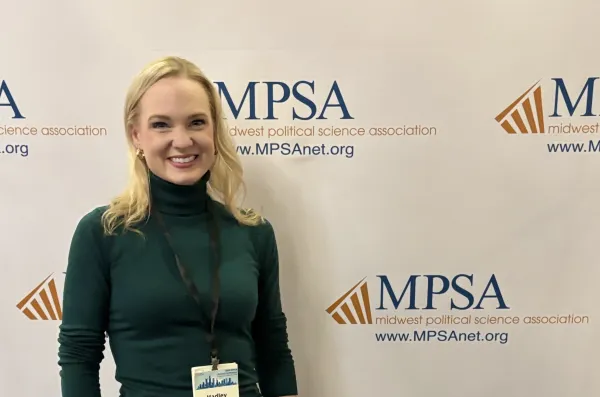
September is Newborn Screening Awareness Month, shining an annual spotlight on one of public health’s most successful programs. As genomic technologies rapidly expand the ability to diagnose rare diseases, Institute researcher Hadley Smith is working to ensure those scientific breakthroughs are translated into policies and programs that improve health outcomes for children and families.
Pursuing the promise and responsibility of genomic medicine
Much of Dr. Smith’s work focuses on newborns and children, where the window of opportunity for detecting a rare disease and facilitating treatment is critical. Her path into genomic medicine began at a pivotal moment for the field.
As an undergraduate studying both genetics and political science, she witnessed the emergence of genomic sequencing as a powerful tool for identifying the molecular causes of disease, sparking fascination with how this genetic information could transform healthcare. “It was an incredibly exciting time in human genetics,” she recalled, as the promise of the Human Genome Project began moving from theory to clinical practice. Equally drawn to questions of policy and public impact, she pursued graduate training in public health, where she explored how health and science policy shape care delivery and population outcomes.
That interdisciplinary journey ultimately led her to apply social science research methods to genomic medicine, examining not only how genetic and genomic testing can help tailor care to an individual’s genetic blueprint, but also the ethical, social and policy considerations that govern its use. “That experience really solidified my interest in studying genomic medicine through a social science lens,” she said, noting that close collaboration with clinicians remains central to her research today.
She describes genomic sequencing to diagnose critically ill infants as one of the most significant advances in human genetics over the past two decades. A molecular diagnosis can inform clinical care decision-making and provide information that is useful to both the infant’s care team and family. “An early diagnosis can prevent a long search for the cause of symptoms, sometimes called a ‘diagnostic odyssey’, which can last several years,” she noted. "We've learned that families value having an answer. They use that information to make plans for their future and to connect with others who are navigating similar experiences.”
Overall, earlier diagnosis can improve treatment opportunities while also helping families gain answers during a time of deep uncertainty.
Developing practical tools to make a real-world impact on children's lives
As advances in genomics and gene-targeted therapies have expanded the number of conditions that can be identified and treated early in life, Dr. Smith recognized a pressing question: How can newborn screening programs determine which conditions should be screened for next?
We've learned that families value having an answer. They use that information to make plans for their future and to connect with others who are navigating similar experiences.
For years, those decisions were informed through a federal evidence review process. As decision analysis task lead for the evidence review group supporting the Advisory Committee on Heritable Disorders in Newborns and Children, Dr. Smith helped evaluate the potential benefits, risks and health impacts of screening for new conditions.
When the federal committee was terminated in early 2025, she and her colleagues saw a gap emerging. Shortly thereafter, they discussed the committee’s critical role in a JAMA Pediatrics Viewpoint, noting that continued national guidance would still be needed in the committee’s absence. State newborn screening programs would still need rigorous evidence to evaluate new screening candidate conditions, but many lacked the resources and expertise needed to develop complex decision models. At the same time, rapid advances in genomic medicine were bringing a growing number of rare diseases into consideration for screening.
While that transition initially created uncertainty, national efforts are now underway to rebuild the review infrastructure. The Health Resources and Services Administration recently announced funding for the Association of Public Health Laboratories to convene a new national workgroup that will help evaluate candidate conditions for newborn screening and address emerging issues in the field. This evolving landscape underscores the importance of tools like DAISY (Decision Analysis to Inform Screening in Young Children), a flexible decision modeling tool designed to help state programs and researchers estimate the potential impact of newborn screening across a wide range of conditions.
DAISY’s development was led by Dr. Smith and Institute staff Sarah Stein and Marcus Henry and built on the concepts of generalizability, scalability, and user-friendliness. Rather than building a new model from scratch for every disorder, DAISY uses a framework that captures the common steps of screening, diagnosis, treatment and outcomes, allowing users to input condition-specific data within an existing structure.
"The pace of innovation is accelerating," she said. "We have many more opportunities to identify conditions early and, increasingly, effective treatments that can change the course of disease." Designed to help policymakers keep pace, DAISY provides a practical way to evaluate how emerging scientific advances could translate into better health outcomes for children and families.
The value of that approach became clear in Smith's focus on metachromatic leukodystrophy (MLD), a rare but devastating genetic disease as a use case. Recently published in Pediatrics, she and colleagues modeled the potential impact of newborn screening for MLD and demonstrated how screening could identify affected children early enough to receive treatment during a critical intervention window, often within the first six months of life. The findings contributed to the evidence base supporting newborn screening for MLD, which was ultimately added to the Recommended Uniform Screening Panel.
We have many more opportunities to identify conditions early and, increasingly, effective treatments that can change the course of disease.
For Dr. Smith, the impact of newborn screening extends far beyond a diagnosis. Early identification can open the door to treatment, improve quality of life and reduce uncertainty for families navigating rare diseases. "Identifying these disorders early provides more opportunities to improve health outcomes for infants and also family psychosocial and social outcomes in a dramatic way," she noted.
Charting a path to improve the health of those with genetic disorders
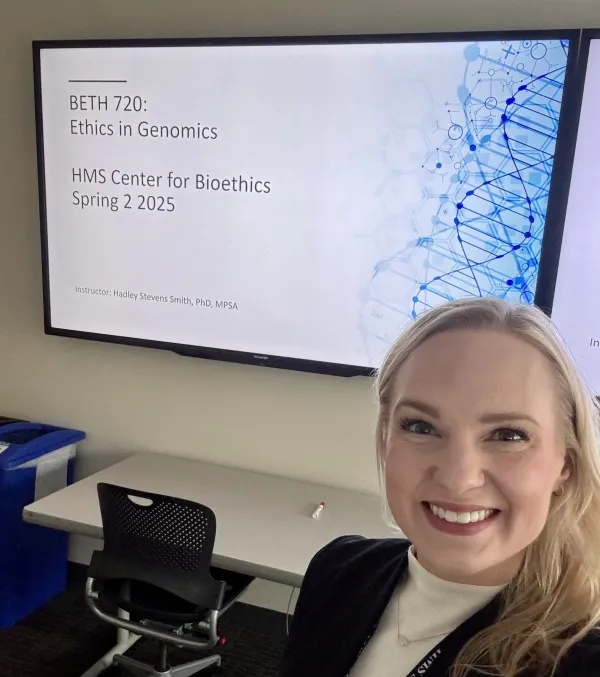
As she looks ahead, Dr. Smith continues to build a research portfolio focused on expanding equitable access to genomic screening, diagnosis and follow-up care for children with rare diseases and their families.
Among her newest projects is PROMPT (Policy Research on Medicaid Program Coverage of Rapid Genomic Testing), an NIH-funded study examining how Medicaid coverage policies influence access to rapid genome sequencing for critically ill infants receiving care in neonatal and pediatric intensive care settings. The project will combine interviews with state Medicaid officials and hospital decision-makers with analyses of Medicaid claims data to better understand how coverage policies affect the use of rapid genomic testing and subsequent health outcomes.
Leveraging the natural variation in Medicaid policies across states, Dr. Smith and her colleagues will also study how different approaches to coverage shape access to care. A third component of the project will use decision analytic modeling to estimate the health and economic impacts of alternative reimbursement strategies, comparing policies that provide dedicated coverage for rapid genome sequencing, those that include testing within broader hospital payments, and those that offer no specific coverage.
Dr. Smith acknowledges that realizing the full promise of genomic medicine will require more than scientific discovery alone. It will require thoughtful policies, evidence-based decisions and a commitment to ensuring that breakthrough technologies reach the patients who stand to benefit most.
During Newborn Screening Awareness Month, that mission serves as an important reminder: genomic medicine can improve lives only when innovation is successfully translated into action, helping children get the right diagnosis, the right care and the best possible start.