Welcoming New Voices to the Institute’s Research Community

The Institute is home to several pre- and post-doctoral fellowships that welcome trainees from several clinical and research disciplines. We strive to build and maintain a vibrant research community, built on the exchange of new ideas. Our latest class of research fellows, who began training at the Institute this summer, is already contributing to that tradition. Because this academic year's cohort includes an exceptional number of talented scientists, we are introducing them in a two-part series.
Discover the breadth of research underway across the Institute and meet the fellows whose innovative work is helping to expand knowledge, foster collaboration, and drive progress in population health.

Noel Chien
Mentor: Darren Toh
Degrees: PhD, National Taiwan University
Hsiu-Ting Noel Chien has rejoined TIDE after being a Visiting Scholar here from May 2024-2025. She will be joining the VAlidity of LInked real-world DAta sTudiEs for Diabetes Mellitus (VALIDATE-DM) team, supporting work using linked real-world data (RWD) for comparative effectiveness and safety research of GLPs. The project aims to improve the validity and generalizability of studies that use linked real-world data, such as claims and electronic health records, to evaluate the comparative effectiveness and safety of glucose-lowering treatments.
What drew you to this research area, and what big question are you most excited to explore right now?
What drew me to this research area is the opportunity to generate evidence that can directly inform clinical and policy decisions, especially in areas where randomized trials may not fully reflect real-world practice. I am particularly interested in how linked real-world data can be used rigorously to study the effectiveness and safety of medications, including glucose-lowering therapies. The big question I am most excited to explore right now is how we can strengthen study design and analytic approaches so that real-world evidence is both valid and meaningful for diverse patient populations.
Why did you choose the Institute for your training?
I hope to deepen my training in pharmacoepidemiology, causal inference, and the use of large, linked healthcare databases. I was drawn to the Institute because of its supportive research environment, strong methodological expertise, and the opportunity to learn from and collaborate with outstanding researchers whose work is closely connected to real-world healthcare decision-making. My experience as a Visiting Scholar from 2024 to 2025 also gave me a strong appreciation for the collaborative culture here, which is a major reason I am excited to return.
Outside of your research, what keeps you energized?
I stay energized by exploring new places, taking walks, trying new foods, and staying connected with family and friends. These small routines help me recharge and keep a balanced perspective.
The big question I am most excited to explore right now is how we can strengthen study design and analytic approaches so that real-world evidence is both valid and meaningful for diverse patient populations.
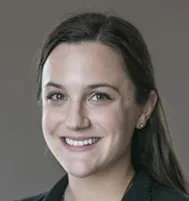
Eliza Dryer
Mentor: Margaret McConnell
Degrees: PhD, Harvard University; MPH, Emory University
Eliza’s focus is strengthening health systems to support pregnant and postpartum people and understanding the intersection of reproductive health and intimate partner violence. Her research centers on reproductive coercion, including its conceptualization, measurement, and application to population-level surveillance and policy-relevant research.
What drew you to this research area, and what big question are you most excited to explore right now?
Many different experiences, interests, and projects came together to draw me to this research area! My motivation to contribute to scholarship and advocacy in the realm of intimate partner violence (IPV) began in college. As an undergraduate, I began organizing and educating with the goal of reducing the incidence and harms of sexual assault and IPV on campus. After college, my career and volunteering interests were largely focused on reproductive autonomy and maternal and child health. Researching intimate partner reproductive coercion (IPRC) has allowed me to keep walking on each of these meaningful paths. Studying how IPV shapes reproductive autonomy, contraceptive access, and pregnancy outcomes lets me bring different interests and passions to the same table—and, I hope, do justice to each of them.
Right now, I am excited to pursue a question growing out of my dissertation research: how does IPRC shape experiences of clinical care and contraceptive use? I’m on a small team that is just beginning an exploratory sequential study on this question, and I’m so eager to see what we will learn.
Why did you choose the Institute for your training?
One of the primary skillsets I’m hoping to develop as a postdoc is working with large administrative datasets such as electronic health records and claims data. Rigorous and thoughtful use of administrative data requires skills that I did not need to apply in my survey-based dissertation research, so I’m quite eager to sharpen and apply those tools now. I can’t imagine a better place to hone such skills than the Department of Population Medicine—with its connection to Point32Health and Harvard Medical School, the wealth of experience among researchers and staff accessing and utilizing administrative data, and the truly multidisciplinary collaborations both within and across divisions. That mix offers the opportunity to build out my analytic toolkit while learning how people from different methodological backgrounds approach the same research questions.
What’s one thing outside of your research that keeps you energized?
My community in Boston keeps me energized! I grew up in the area and attended graduate school here, so I am lucky enough to have decades of memories and friendships in Boston. This community gives me so much to be excited about outside of research and work: rooting for the Celtics, taking advantage of talks and shows inside the city (as well as walks and hikes outside of it), volunteering with my church, and sharing all of the above with friends both old and new.
Studying how intimate partner violence IPV shapes reproductive autonomy, contraceptive access, and pregnancy outcomes lets me bring different interests and passions to the same table—and, I hope, do justice to each of them.
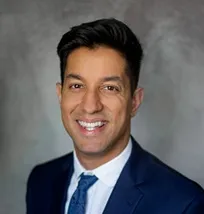
Rohan Khazanchi
Mentor: Megan Cole Brahim
Degrees: MD, University of Nebraska Medical Center; MPH, University of Minnesota School of Public Health
Rohan is a fellow in the HMS Fellowship General Internal Medicine and Primary Care. He recently completed his Internal Medicine & Pediatrics residency training with the Harvard Combined Med-Peds Residency Program at Brigham & Women's Hospital, Boston Children's Hospital, and Boston Medical Center. Rohan broadly strives to advance health equity for and with marginalized populations, with a particular focus on stigmatized conditions (substance use disorders, serious mental illness, and infectious diseases), the (mis)use of race in clinical algorithms, and the care of children, young adults, and families involved in the child welfare, juvenile justice, adult criminal-legal, and immigrant detention systems.
What drew you to this research area, and what big question are you most excited to explore right now?
I have been focused on issues at the nexus of health and carceral systems for much of the last six years because, especially when working in safety-net settings as an internist and pediatrician, my patients frequently identify personal or family interactions with child welfare, criminal-legal, and immigrant detention systems as the most impactful health-related experiences in their lives. I am a firm believer in a “margins-to-center” theory of change: focusing on opportunities to improve the health of our most marginalized neighbors will have the greatest public health impacts writ large.
There are a lot of gaps in current research on carceral systems-involved populations, but one big question I am hoping to explore during fellowship relates to the health and child welfare outcomes of infants with prenatal substance exposure (IPSE). The number one reason children end up in the foster care system is parental substance use. Foster care involvement is among the strongest predictors of youth arrest and incarceration in the juvenile justice system, and juvenile justice involvement is among the strongest predictors of adult incarceration. So, intervening upstream to support children and families affected by substance use disorders can truly have an intergenerational impact.
Here in Massachusetts, folks across the state are also thinking about how we can better serve this population. I led a pair of quasi-experimental studies to evaluate clinical guidelines implemented at Boston Medical Center in 2021 to end reflexive mandatory reporting of all IPSE to the child welfare system, instead orienting our clinical teams to focus on multidisciplinary integrated perinatal SUD care and social service linkage. Our early findings were published in JAMA Pediatrics in 2024, highlighting that nearly half as many IPSEs were reported at BMC after guideline implementation (compared to 16 other hospitals statewide), without evidence of adverse consequences on birth hospitalization length or custody at discharge. These findings helped contribute to passage of a new Massachusetts bill in December 2024 which will likely lead to similar approaches statewide. However, we still need broader and longer-term outcomes, and we need to ensure hospitals with limited resources are well-equipped to navigate the complexities of prenatal SUD treatment and dyadic service linkage as their reporting practices shift. I intend to continue thinking about how cross-sector data systems could be created and sustained to allow more rigorous policy evaluations as this bill moves towards its implementation phase.
Why did you choose the Institute for your training?
In the early stages of my career, I have mostly worked with physician-researchers and within academic health systems. I wanted to broaden my experiences during fellowship training by learning from a broader array of cross-disciplinary expertise. I am especially interested in quantitative methods for health policy evaluation and hope to continue growing as a quasi-experimental researcher over the next 2 years. DPM has an incredibly deep bench of economists, epidemiologists, statisticians, clinicians, and more – I’m eager to listen, learn, and perhaps occasionally be able to offer my boots-on-the-ground perspectives as a physician who cares for sick kids and adults in safety-net environments.
Outside of your research, what keeps you energized?
Having just exited the long and dark tunnel of residency training, I am happy to finally have bandwidth to reconnect with old hobbies like playing tennis, making music, and travelling. I am also excited to start my first attending job at Boston Medical Center – when I’m not tinkering with research projects, I do love that my “other day job” includes teaching medical students and residents, working with mission-aligned multidisciplinary teams, and caring for a very diverse patient population.
I am a firm believer in a “margins-to-center” theory of change: focusing on opportunities to improve the health of our most marginalized neighbors will have the greatest public health impacts writ large.
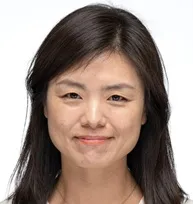
Kyung Jin Lee
Degrees: PhD in progress
Kyung Jin is a PhD student at The University of Hong Kong. During her visit, she will conduct a pharmacoepidemiologic study entitled “Trends in benzodiazepine and Z drug use among children, adolescents, and young adults and associated safety risk."
What drew you to this research area, and what big question are you most excited to explore right now?
I was drawn to pharmacoepidemiology because it combines clinical questions with data to better understand how medications are used and their real-world benefits and risks. I'm particularly interested in the safety of prescription sleep medications among children, adolescents, and young adults. As concerns about mental health continue to grow, more young people are using these medications despite limited evidence on their long-term safety. I'm excited to explore whether these treatments are safe and which options may be the safest for young people who need them.
Why did you choose the Institute for your training?
I was particularly drawn to the Institute because of its strong expertise in pharmacoepidemiology and its long history of collaborating with the FDA on large-scale studies using real-world healthcare data. I am excited to learn about emerging research directions and current priorities in the U.S. while gaining experience working with large healthcare claims databases. My previous research in Hong Kong has primarily used electronic health record data, so I am looking forward to exploring a different type of data source and learning how findings may differ across healthcare systems. I also hope to learn from and exchange ideas with researchers from diverse backgrounds in the research community here.
What’s one thing outside of your research that keeps you energized?
I enjoy hiking and running. I try to spend at least one day outdoors each weekend, exploring nature trails or going for a run. Time in nature helps me recharge, stay active, and maintain a healthy balance between work and life.
I am excited to learn about emerging research directions and current priorities in the U.S. while gaining experience working with large healthcare claims databases.

Anna Shchetinina
Mentors: Izzuddin Aris, Marie-France Hivert, Emily Oken
Degrees: PhD, Harvard School of Public Health
Anna Shchetinina joined CoRAL and Project Viva as a postdoctoral fellow. Anna recently completed her PhD in Population Health Sciences at HSPH, focusing on the developmental origins of health and disease with a particular emphasis on prenatal substance exposures and life-course health outcomes. She will be working with Emily Oken, Marie-France Hivert, and Izzuddin Aris on grant aims for the Viva Young Adult Grant, focused on positive health, exploring the physical, mental, and behavioral health outcomes in late adolescence and young adults. She also plans to explore the relation of various prenatal exposures, including social, environmental, and nutritional exposures, to the positive health outcomes.
What drew you to this research area, and what big question are you most excited to explore right now?
I have always been fascinated by how experiences and exposures early in life can shape health trajectories across the lifespan. Right now, I am particularly excited about shifting from studying risk factors and specific adverse outcomes to taking the “whole body approach” and exploring the concept of positive health and resilience. One of the big questions I hope to investigate is why some individuals thrive despite early-life challenges and which prenatal, social, environmental, and nutritional factors may promote healthier developmental trajectories.
Why did you choose the Institute for your training?
I am very excited about a unique opportunity to work within a truly interdisciplinary environment that brings together expertise in epidemiology, clinical medicine, nutrition, and life-course research. I was particularly drawn to the Institute because of its long-standing leadership in life-course epidemiologic research and its rich longitudinal data resources. During my time here, I hope to deepen and widen both my subject-matter knowledge and analytical and methodological skills. I am especially excited about learning from investigators with diverse perspectives and contributing to research that has direct implications for promoting health across generations.
What’s one thing outside of your research that keeps you energized?
I am an explorer at heart and enjoy discovering new places, whether through travel or simply exploring my own city. I love learning new things and finding creative outlets. Recently I have developed an interest in floral design and gardening. Spending quality time with family and friends, especially over a good home-cooked meal, is another important source of energy and joy for me!
I am very excited about a unique opportunity to work within a truly interdisciplinary environment that brings together expertise in epidemiology, clinical medicine, nutrition, and life-course research.
These new Institute research fellows represent the next generation of researchers advancing knowledge and improving population health. Stay tuned for the second installment of this series, where we'll introduce more of the scientists helping to shape the future of discovery at the Institute.
Inspired by their work? Explore our website to learn more about our research programs and projects, faculty mentors, and training opportunities. If interested in emerging research findings or upcoming opportunities to become a part of our growing community of scholars, follow us on LinkedIn and subscribe to our newsletter, PopMedPulse.