Clinical Epidemiology and Population Health Curriculum
A core component of the Harvard Medical School Pathways Curriculum.

Course Leadership
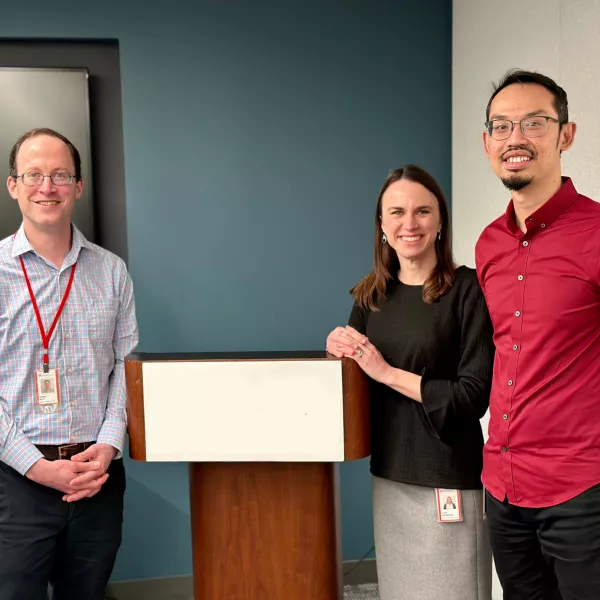
Led by Institute faculty members Izzuddin Aris, Jason Block, Landon Hughes and Laura Garabedian. Every year, two dozen other Institute faculty, research scientists, and fellows teach in the Clinical Epidemiology and Population Health (CEPH) courses.
This longitudinal CEPH curriculum spans two required courses in the pre-clerkship and post-clerkship phases of the HMS curriculum: Essentials of the Profession I and II.
Pre-clerkship (Essentials I)
Students are introduced to key clinical epidemiological concepts using clinical examples.
Post-clerkship (Essentials II)
Students learn additional clinical epidemiology concepts to critically appraise population health research studies and explore and improve population health.
These courses teach core skills of clinical epidemiology (biostatistics, study design, and critical reasoning) as they apply to the care of individuals and populations and introduce key public and population health topics. The curriculum teaches the skills needed to critically evaluate evidence and use it appropriately in clinical decisions and population health management.
All CEPH sessions incorporate components of case-based collaborative learning. This pedagogical approach was designed and adopted by HMS faculty to teach medical and dental students to think critically, apply basic concepts, and work in teams.
Clinical Epidemiology and Population Health (CEPH) is one of four disciplines in the Essentials of the Profession I course, known to students as "Essentials." The course also incorporates ethics, social medicine, and health policy content. DPM faculty member Dr. Laura Garabedian is the Essentials I Course Director.
This required, month-long pre-clerkship course fosters the skills that students need to:
- Critically evaluate evidence and use it appropriately in clinical decisions and population health management.
- Consider multiple perspectives to understand the social, economic, and political forces that affect both the burden of disease for individuals and populations.
- Become grounded in the ethical principles that underlie clinical care, research, and professionalism with the facility to recognize and analyze ethical issues in practice.
- Understand the health policy context in which they will practice.
The CEPH component of this course, primarily conducted in small groups, aims to teach students the specific skills of clinical epidemiology to interpret and apply medical evidence to disease prevention and care for individual patients and populations.
CEPH provides students with the knowledge and skills to:
- Evaluate the strengths and weaknesses of medical evidence;
- Identify factors that can distort medical evidence such as chance, bias, and confounding;
- Apply the most appropriate study design to their hypotheses;
- Select and interpret appropriate statistical approaches;
- Interpret evidence to inform patient care, including data from screening and diagnostic tests and technologies;
- Effectively communicate to patients the benefit and harm of interventions to prevent and treat disease.
CEPH Essentials I Topics (and associated key concepts documents):
- Study Design and Causality – Critically Appraising What We Think We Know
- Frequency and Association: Calculating Measures of Population Health Impact
- Descriptive Statistics
- Sampling Distribution
- Interpreting Statistics in Clinical Research
- When There are More Than 2 Variables: Bias, Confounding, Effect Modification
- Randomized Controlled Trials and Power
- Power and Sample Size
- Multivariable Modeling
- Diagnostic Testing and Screening
For more details, see the full CEPH Essentials I Syllabus
All Pathways students are required to also take the month-long Essentials of the Profession II course in their third or fourth year of medical school. CEPH is one of five core topic areas within the “Essentials II” course, which also incorporates content on ethics, social medicine, health policy, and healthcare delivery and leadership. This post-clerkship course builds on experiences in Essentials I and the Principle Clinical Experience (i.e., clerkship) to refine students’ critical thinking skills to:
- Interpret and critique data from various sources to explore and improve population health and employ clinical epidemiology concepts to critically appraise studies.
- Identify the complex interplay of social and structural forces that affect health and health care to improve clinical care.
- Assess the health policy context in which our health care system operates and how it informs and impacts clinical practice, while discovering opportunities for innovation and reform.
- Discuss and appraise the ethical principles that underlie clinical care, research, and professionalism, and apply these principles to ethical issues in practice.
- Understand, apply, and critique the key tenets of value-based health care and their application to health care organization, delivery, and assessment.
For the CEPH sessions, students meet in faculty-facilitated, student-led journal clubs to apply clinical epidemiology concepts from Essentials I to critically appraise population health research. In the journal clubs, students are exposed to advanced clinical methodological concepts, such as machine learning, cost-effectiveness analysis and quasi-experimental designs. CEPH also includes interactive lectures on timely population health topics, including substance use disorder and treatment, climate change, maternal health, and nutrition policy, given by local and national experts.
CEPH Essentials II Key Concepts Documents:
- Quasi-Experimental Designs
These courses teach core skills of clinical epidemiology (biostatistics, study design, and critical reasoning) as they apply to the care of individuals and populations and introduce key public and population health topics. The curriculum teaches the skills needed to critically evaluate evidence and use it appropriately in clinical decisions and population health management.
All CEPH sessions incorporate components of case-based collaborative learning. This pedagogical approach was designed and adopted by HMS faculty to teach medical and dental students to think critically, apply basic concepts, and work in teams.